Verdict - Read it. In a world fascinated by training large language models, I hope this book tempts you to start training your own mind.
I still remember this title 13 years after reading it.
Writing this review even took me down a short walk through my Amazon account’s digital orders—a memory lane of sorts. As I read through the list of books I've bought over the years, I noticed a strange pattern: I can often calibrate the effect a book had on me by how I remember it. Some titles trigger instant recall of content. Others I remember reading, but the details are fuzzy. And some just draw a blank—those are usually the ones I never finished.
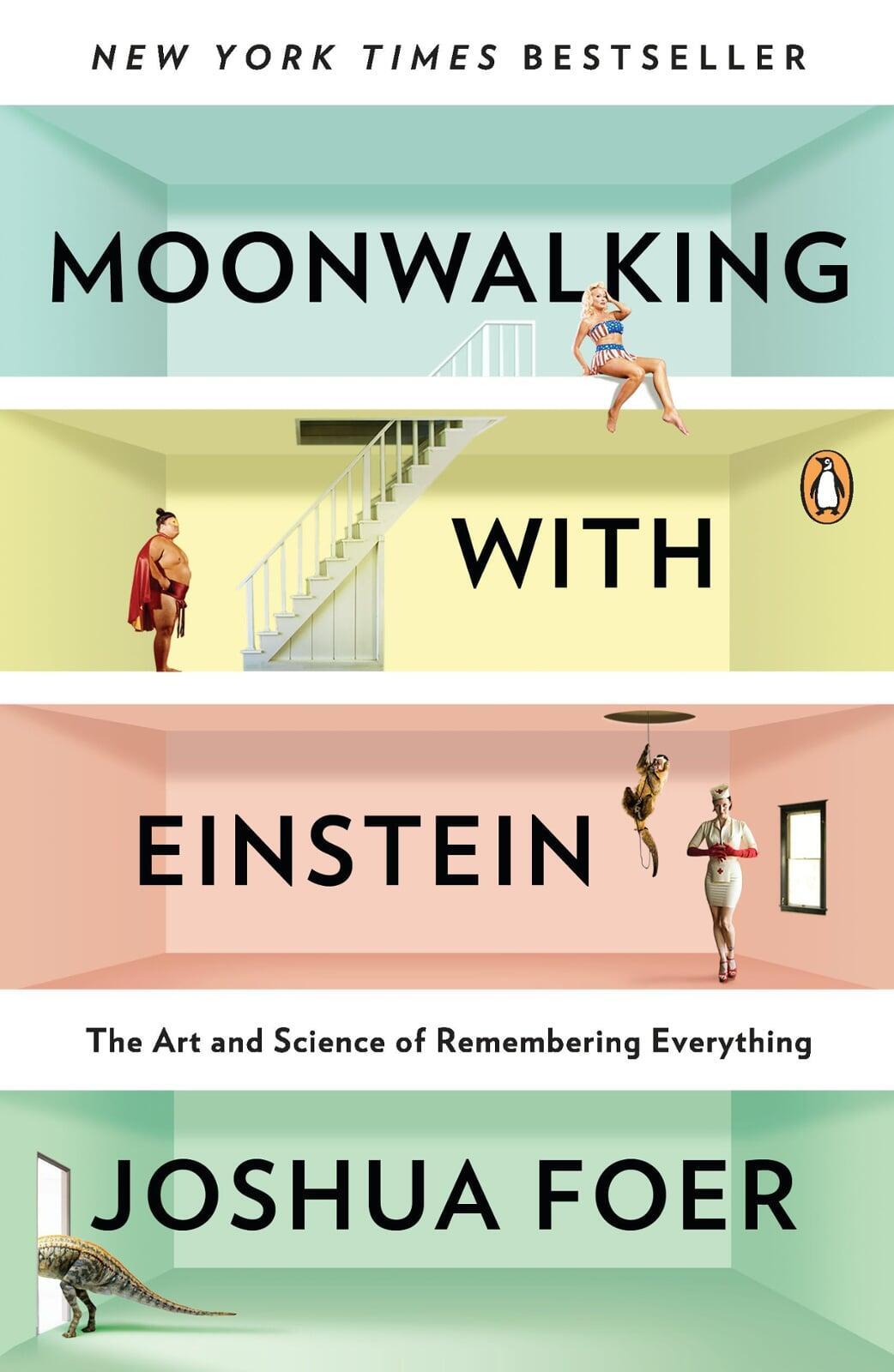
In 2012 alone, I bought 42 Kindle books — that I still recall Moonwalking with Einstein by Joshua Foer, so vividly says something. For a book on memory and the various ways one could train it, this feat alone is success in my eyes.
Not only do I remember the title, but I also remember the memory device — mnemonics — that Foer used to make it so memorable. A mnemonic is a simple device—like a sentence, image, or phrase —used to aid memory. There have been many times I could recall a book’s contents and make a strong recommendation, but couldn’t, for the life of me, remember the title or author. This is a problem I never faced with Foer's book — Moonwalking with Einstein is etched in my memory.
The book is fast-paced and, though non-fiction, reads like a thriller. It was a page turner for me. I definitely got carried away with the author's interviews, descriptions of memory training techniques, and escapades in the world of memory training and memory championships, but what stuck with me most is the deeper reason for training our memory.
I am paraphrasing, but creativity in its simplest form is two disparate facts or ideas coming together to make something new. So if one wants to be creative, one should not only consciously build a large repository of ideas and facts but should also train one's mind to access them. As I wrote the previous lines, I had to go and find the relevant section in the book. Foer communicates the same idea brilliantly -
Creativity is, in a sense, future memory.” If the essence of creativity is linking disparate facts and ideas, then the more facility you have making associations, and the more facts and ideas you have at your disposal, the better you’ll be at coming up with new ideas. As Buzan likes to point out, Mnemosyne, the goddess of memory, was the mother of the Muses. The notion that memory and creativity are two sides of the same coin sounds counterintuitive. Remembering and creativity seem like opposite, not complementary, processes. But the idea that they are one and the same is actually quite old, and was once even taken for granted. The Latin root inventio is the basis of two words in our modern English vocabulary: inventory and invention. And to a mind trained in the art of memory, those two ideas were closely linked. Invention was a product of inventorying. Where do new ideas come from if not some alchemical blending of old ideas? In order to invent, one first needed a proper inventory, a bank of existing ideas to draw on. Not just an inventory, but an indexed inventory. One needed a way of finding just the right piece of information at just the right moment.
Ever since I read those lines, I’ve had a healthy skepticism toward externalizing one’s brain. How can we stay creative if everything we learn lives outside our own minds? In the age of LLMs, this book feels more relevant than ever—a powerful case for training not just machines, but ourselves.
P.S. I thought I picked this up because of Bill Gates’ recommendation—but turns out I bought it a few days before his review came out. Maybe that’s just my memory playing tricks… fitting, in a way.