My verdict: Read it. It’s a great introduction to the self-transformation model of Turning Pro. For those already on the journey, it serves as inspiration and a timely nudge.
For the past few years, I have worked hard to improve my ability to sit for long hours and focus on a single important task. This year, I am experimenting with two specific tactics. One, I am using an analogue calendar that can't interrupt me with multiple notifications. Two, as a self-identifying maker, I give myself large chunks of uninterrupted time during the workday.
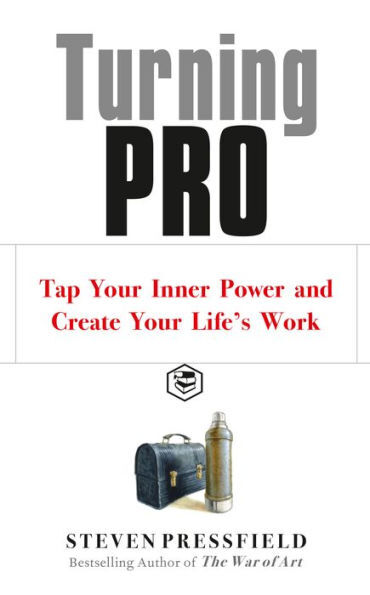
So, I was pleasantly annoyed when I got a laptop calendar notification that read, "Turned Pro" with the accompanying event description, "The day you read Turning Pro by Steven Pressfield." Pleasant, because it was a reminder to do something I like – read. Annoyed, because I would have to move around the small list of things I planned to accomplish for the day.
Should I listen to my past self or my current self for the benefit of my future self?
I decided to read the book. My past self would not have taken the trouble of creating an annual ritual around reading this book if it didn't feel it was that important, and I am a fan of Pressfield's work. The War of Art and Gates of Fire both were insightful and enjoyable reads.
I made myself a cup of instant chai, put my headphones to drown out office chatter, and started reading.
The book has short chapters. In the very second chapter, Pressfield introduces the three models of self-transformation. The first is the therapeutic model, where we are sick and may be remedied by treatment. The second is the moralistic model, where we have done something wrong, and we can make things right with punishment and penance. The third model — the book’s central premise — is that our problem is living as amateurs, and the solution is turning pro. The author adds that you don't need to take a course or buy a product. You need just to change your mind. Turning Pro is free, but it's neither without cost nor is it easy.
The rest of the book dedicates itself to differentiating between an amateur and a professional as the author builds his case for Turning Pro. Through this lens, you can see why an addict is an amateur and an artist is a Pro — even though, on the surface, their habits may look surprisingly similar. That observation hit harder than I remembered. While I remembered the central thesis, I had forgotten many of the book’s sharper insights.
The book is short and easy to digest. I took about an hour and a half to reread the book. If turning pro is a decision you renew daily, then reading Turning Pro has to be an annual ritual for me — at least for the near future.
In service of remaining Pro, I took another two minutes to add an entry to my analogue calendar that my future self will see a year from now.