Lately, there have been countless stories about how Indians lack basic civic sense. We Indians seem to have a general disregard for others, especially in public spaces.
Our concern for others often stops at the boundary of the group we belong to.
Even at my co-working space, I find it hard to understand how people sit at their desks taking long calls or watching videos on their phones without earphones. The few who step out of their office rooms to avoid disturbing their teammates often walk straight into the open workspace—filled with freelancers and individual contributors—instead of going to the area earmarked for calls. Concern for their teammates doesn’t translate into concern for the random coworker.
This is one of the reasons why we have clean houses but dirty roads. We are considerate toward our immediate family who live with us, but why should we care about strangers on the road?
The toilets in this co-working space are not pristine, but definitely clean. Every now and then it does get really dirty, but thanks to the quick-acting housekeeping staff it never stays that way for long. But I have always wondered how people manage to make them so dirty in the first place.
I used to be miffed about all the water under the urinals. I always assumed it was a leaky flush.
Until I walked into the toilet last week and noticed a poster in Hindi stuck right above the urinals.
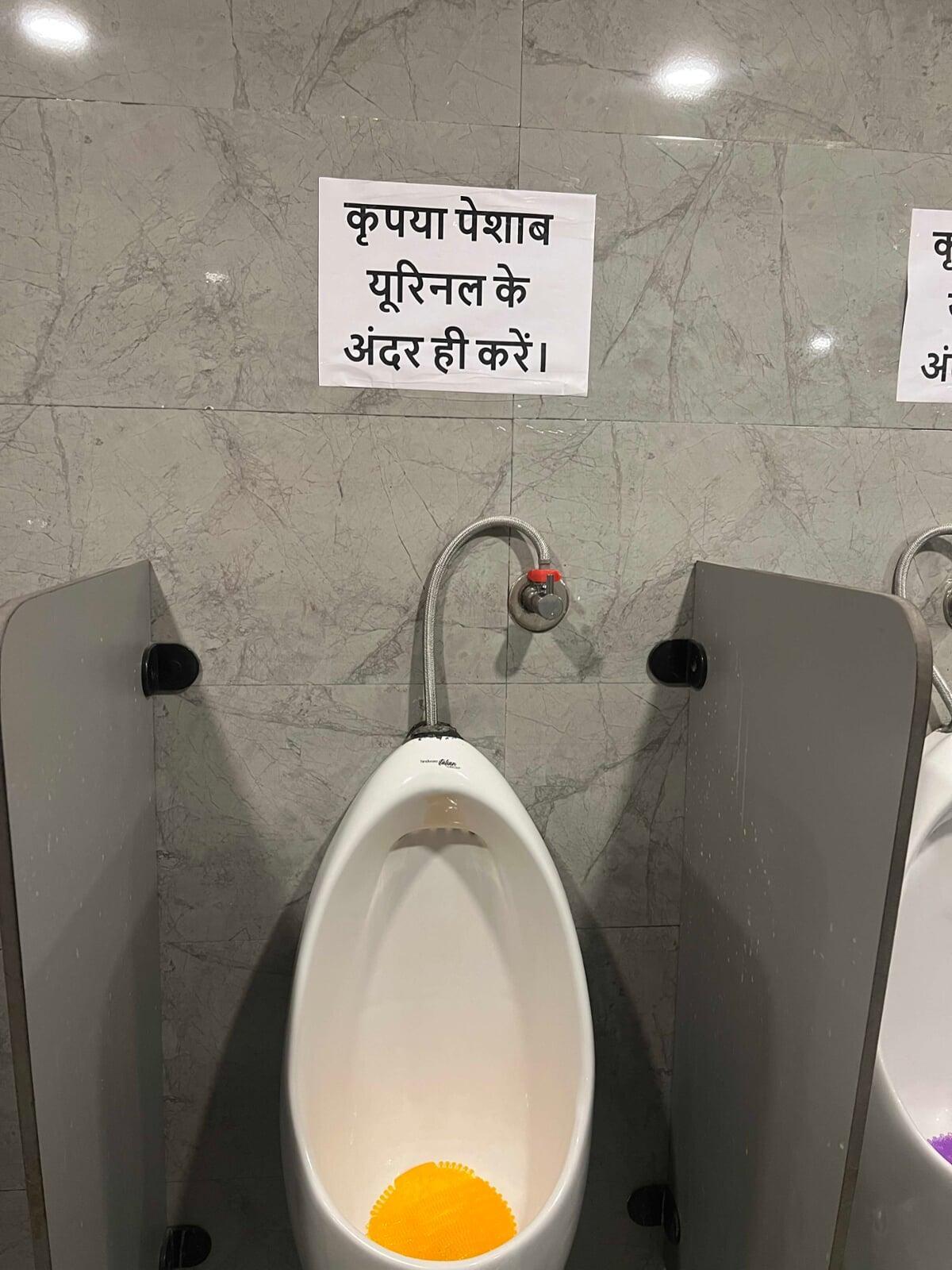
The translation:
“Please pee inside the urinal only.”
WTF?
I quickly found the manager to confirm that he had been forced to put up the notice because men were not taking aim properly. He nodded and said the housekeeping staff were also getting tired of cleaning up the mess. I was still in shock but could see a silver lining emerge.
Once the men in this co-working space get used to clean, dry urinals, they might start appreciating them. And when that happens, they might even remind others of the same simple rule: pee inside the urinal.
Maybe this is how civic sense grows—one awkward signboard at a time.